Content planning · Free resource pack
Content brief template
Give the next person enough context to write a useful first draft.
3 pages · Fillable PDF · 19 KB · No signup
What this is for
Use this when a request arrives as “we need a post” or “can you write a page?” It helps you agree what the piece should do before anyone starts writing. Use it for a web page, article, newsletter story or social post. A short, specific brief is easier to use than a long document full of adjectives.
Free to download and adapt for your own work. The PDF has six text fields and four review checkboxes. Save a copy after filling; use the text template for longer answers.
Work through it
Describe the reader’s situation
“Potential customers” is too broad to guide a draft. Write down who will read this, what brought them here and what they need to decide. Use what you know from the brief or research. Mark a guess as a guess.
Make one promise to the reader
Write the main message in a sentence. Then list the questions the piece must answer. If the sentence contains several unrelated promises, reduce the scope or split the assignment.
Put the sources beside the claims
Name the source for each product fact, result, quote or deadline. Keep missing information visible. A writer should be able to tell which details are approved and which still need checking.
Agree what a finished draft contains
Specify the format, approximate length, next action, reviewer and deadline. Add two or three acceptance checks that fit this piece. “Sounds professional” does not tell someone what to revise.
A filled example
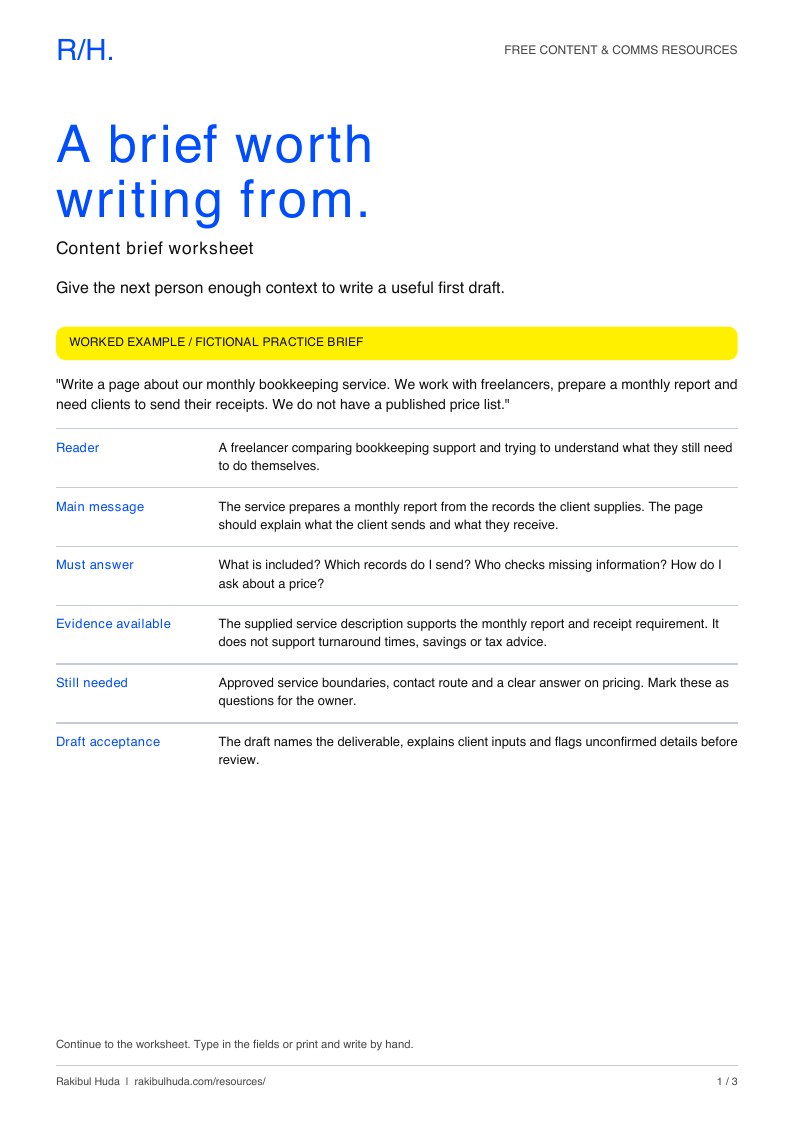
Fictional practice brief. The company, service and details below are invented to demonstrate the worksheet.
“Write a page about our monthly bookkeeping service. We work with freelancers, prepare a monthly report and need clients to send their receipts. We do not have a published price list.”
- Reader
- A freelancer comparing bookkeeping support and trying to understand what they still need to do themselves.
- Main message
- The service prepares a monthly report from the records the client supplies. The page should explain what the client sends and what they receive.
- Must answer
- What is included? Which records do I send? Who checks missing information? How do I ask about a price?
- Evidence available
- The supplied service description supports the monthly report and receipt requirement. It does not support turnaround times, savings or tax advice.
- Still needed
- Approved service boundaries, contact route and a clear answer on pricing. Mark these as questions for the owner.
- Draft acceptance
- The draft names the deliverable, explains client inputs and flags unconfirmed details before review.
From a loose request to a usable brief
The fictional example on this page shows a service-page request becoming a writing brief. In my SEBPO project, the work involved positioning, service descriptions and presentation design. You can see those outputs in the portfolio; this worksheet is a separate resource, not SEBPO’s original brief.
SEBPO sales presentation ↗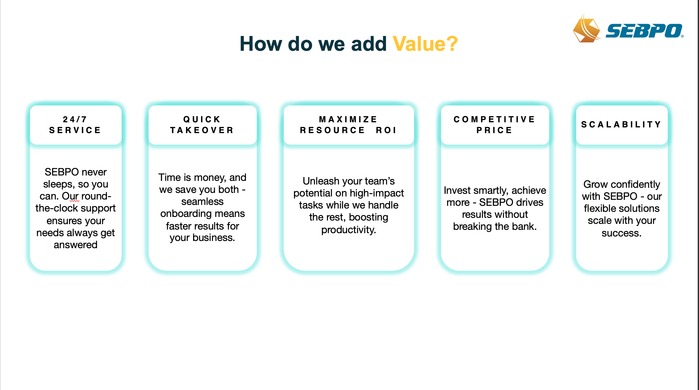
The editable template
Copy this into your document and fill in the blanks. Add or remove sections to fit the brief.
CONTENT BRIEF

Project / owner / date:
Format and approximate length:
Writer / reviewer / deadline:

1. READER
Who is this for?
What situation brings them to this content?
What do they already know?
What should they be able to decide or do?
Known from research / assumption:

2. MESSAGE
Main message in one sentence:
Questions the piece must answer:
What is outside scope?

3. EVIDENCE
Claim / source location / date / approval status:
Permitted quotes, examples and images:
Missing information and who can confirm it:

4. DRAFT
Working headline:
Suggested sequence:
Next action and destination:
Voice examples / words to explain or avoid:

5. ACCEPTANCE
Three things a finished draft must contain:
Who checks facts? Who approves publication?
Open questions before writing:
Before you use it
- Can the writer picture a specific reader and situation?
- Is the main message supported by the supplied sources?
- Are assumptions and missing information visible?
- Do the reviewer and writer agree on what the piece must contain?
Content brief AI skill
A skill is a saved set of instructions for your AI assistant. This one helps it work through the template and keep missing information visible.
Bring: The assignment, intended audience and any source material you can share.
ZIP · 2 KB · One SKILL.md file · No scripts or account connection
How to use it
- Unzip the download. Follow your assistant’s instructions for adding the skill folder.
- If your assistant does not support skills, open SKILL.md and paste its contents into a chat before your request.
- Add your source material and the request below. Review the answer against your sources before using it.
Use material you are allowed to share. The skill drafts or reviews content; it does not publish anything. Results depend on the assistant and the information you supply.
A request to start with
Use the content brief skill. Make a brief from the request and source notes below. Keep unsupported details in an open-questions section. Do not write the finished piece yet.

Request:
Reader:
Source notes:
Format and deadline:
Read the full skill before downloading
---
name: source-grounded-content-brief
description: Turn a loose content request and supplied source material into a writing brief with a defined reader, supported message and visible open questions. Use before drafting a page, article, newsletter story or social post.
---

# Source-grounded content brief

Turn an assignment into a brief someone else can write from. If the user asks for a finished draft as well, keep the brief proportionate and continue into the requested draft.

## Establish the assignment

Identify the reader, the situation that brings them to the content, the decision or action the piece should support, and the requested format. Use supplied research when available. Distinguish an observed reader need from a proposed one. Ask only for missing information that changes the direction; otherwise make a provisional brief with visible open questions.

## Build the brief

Include the main message, the questions the content must answer, useful source material, boundaries, next action, and delivery requirements. Follow the user's existing template if provided. Keep the main message narrow enough for the format. Do not turn every assignment into a campaign or impose a word count when the user has not chosen one.

Attach each factual claim to its source location, such as a page, paragraph, slide or supplied note. A source may describe a company's claim without proving it. Keep that distinction. Missing prices, results, deadlines, permissions and product capabilities remain open questions; do not fill them with plausible numbers or generic promises.

Suggest an outline only when it helps the writer. Acceptance checks should describe this deliverable: questions answered, evidence included, terms explained and a valid next step. Avoid checks such as “engaging” without explaining what would make the piece useful.

## Deliver

Return the usable brief first, then a short list of unresolved decisions with an owner when known. Mark assumptions as provisional. Respect source permissions and do not copy confidential source material into public examples. Drafting does not authorize publishing or contacting people.

Before finishing, check that every proposed claim has evidence or is clearly marked for confirmation, the next action is actually available, and the brief matches the user's scope.
See how the message becomes a presentation
The SEBPO case study shows my positioning, copy and design work. It gives you a finished example to compare with your own brief.
See the project ↗